Sustainable Carbon: How CNC Graphite Machinists Are Engineering the Next Century of Materials
Sustainable carbon technologies, including hydrogen fuel cells and high-efficiency solar furnaces, rely heavily on the precision components created by CNC Graphite Machinists. At Tokai Carbon Graphite Solutions (TCGS), these skilled professionals transform raw isostatic graphite into the conductive bipolar plates and thermal insulators that power the green energy revolution.
The Hardware Behind Sustainability
The future is not just digital; it is sustainable. However, sustainability requires hardware. Solar panels need ultra-pure silicon. Electric vehicles require advanced battery chemistries. Hydrogen fuel cells rely on complex flow fields.
Consequently, the material science behind these technologies is critical. This is where CNC Graphite Machinists become the unsung heroes of the climate fight.
You cannot build a green future with rusty parts. Therefore, engineers turn to graphite. It is conductive. It is heat-resistant. It is chemically inert. But raw graphite is just a block. It requires a master craftsman to unlock its potential.
Powering the Hydrogen Economy
Hydrogen fuel cells are the “holy grail” of clean transport. They generate electricity without combustion, emitting only water. Inside every stack sits a component called the bipolar plate.
This plate must conduct electricity while keeping gases separate. Furthermore, it must feature intricate channels to guide hydrogen and oxygen.
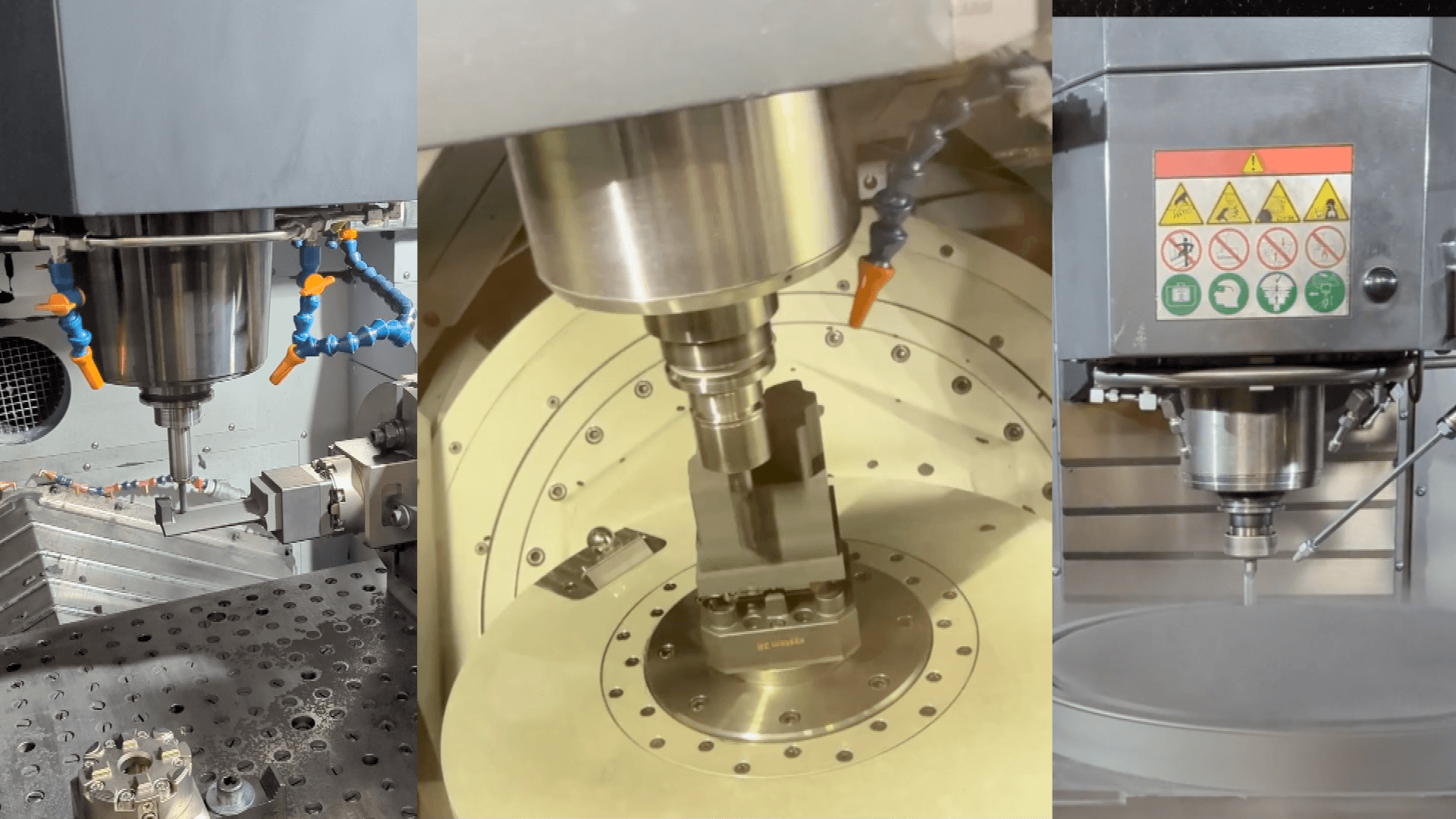
CNC Graphite Machinists at TCGS mill these channels with micron-level precision.
- The Challenge: The plates are thin and brittle.
- The Skill: Machinists must balance speed with delicacy.
- The Impact: A perfect cut increases the efficiency of the entire vehicle.
Furthermore, we enhance these plates using carbon coatings. Specifically, we utilize Chemical Vapor Deposition CVD to seal the graphite. This ensures the hydrogen stays exactly where it belongs.
Solar Energy and Extreme Heat
Solar panels start as sand. To turn that sand into a silicon wafer, you must melt it. This happens in a crystal growing furnace at temperatures above 1,400°C.
Metal components would melt instantly in this environment. Therefore, the industry relies on carbon and graphite fixtures.
CNC Graphite Machinists craft the heaters, heat shields, and crucibles that make this process possible.
- Crucibles: Hold the molten silicon.
- Heaters: Maintain precise thermal gradients.
- Insulation: Reduces energy consumption.
By machining these parts to tight tolerances, our team directly improves the energy efficiency of the furnace. Better insulation means less electricity is needed to grow the crystal. Consequently, the solar panel becomes “greener” before it is even installed.
Advanced Protection: CVD and SiC
Graphite is robust, but green tech environments are harsh. Corrosive gases can attack the material. To combat this, we apply advanced Carbon coatings and graphite coatings.
The most effective shield is a Silicon Carbide coating (SiC).
- The Process: We use CVD to grow a layer of ceramic-like SiC on the graphite.
- The Result: A surface that resists oxidation and chemical attack.
However, the coating is only as good as the substrate. If the CNC Graphite Machinists leave a rough surface, the coating will not adhere properly. Therefore, the machinist creates the foundation for the entire protective system.
Why Gen Z and Millennials Choose Tokai
For younger generations, a career must offer more than a paycheck. It must offer purpose.
At TCGS, you are not just cutting parts for a disposable gadget. Instead, you are building the infrastructure of a cleaner planet.
- The Impact: Your work supports the shift away from fossil fuels.
- The Culture: We value innovation and forward-thinking.
- The Stability: We have decades of expertise in carbon and graphite machining.
We combine the agility of a tech startup with the resources of a global materials leader. This provides a unique environment for CNC Graphite Machinists who want to grow.
The Art of Machining Graphite
Working with graphite is distinct from working with metal. It produces dust, not chips. It is abrasive, not gummy.
CNC Graphite Machinists must master specific strategies:
- Tooling: We use diamond-coated tools to withstand the abrasion.
- Dust Control: We utilize high-velocity vacuum systems to keep the air clean.
- Programming: Tool paths must account for the material’s grain structure (or lack thereof).
This is a specialized skill set. It differentiates a general operator from a true graphite specialist. At TCGS, we provide the training to bridge that gap. We turn skilled machinists into material experts.
Join the Sustainable Frontier
The demand for green technology is exploding. Consequently, the demand for precision graphite components is rising with it.
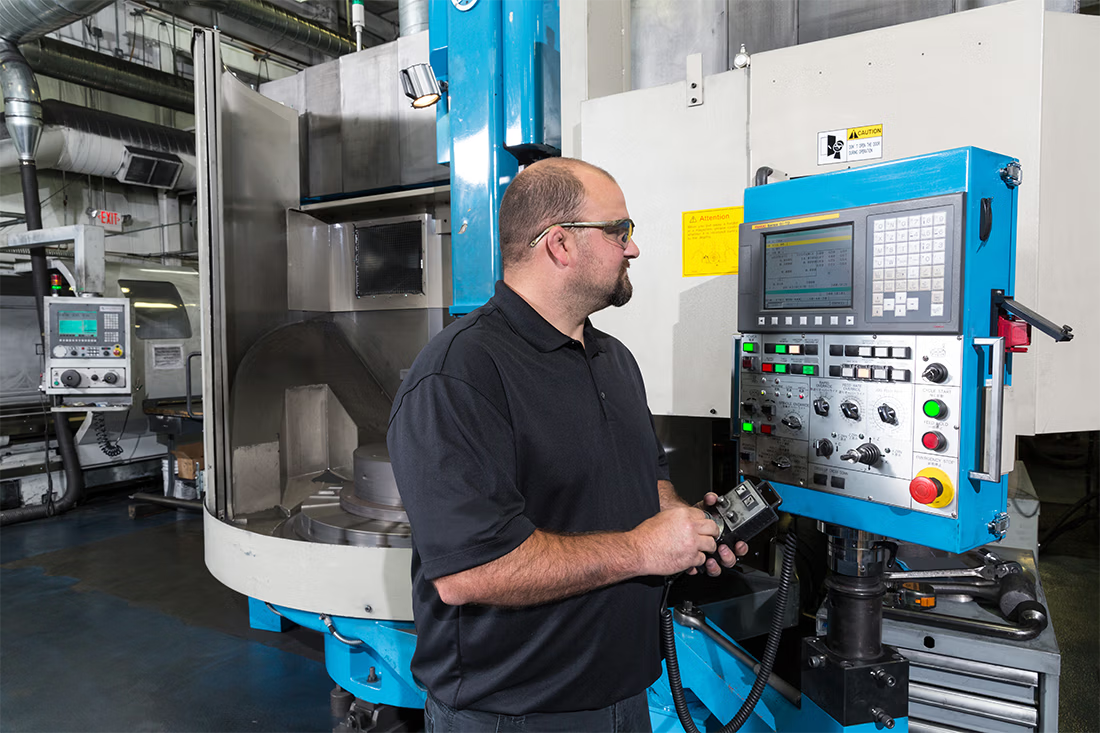
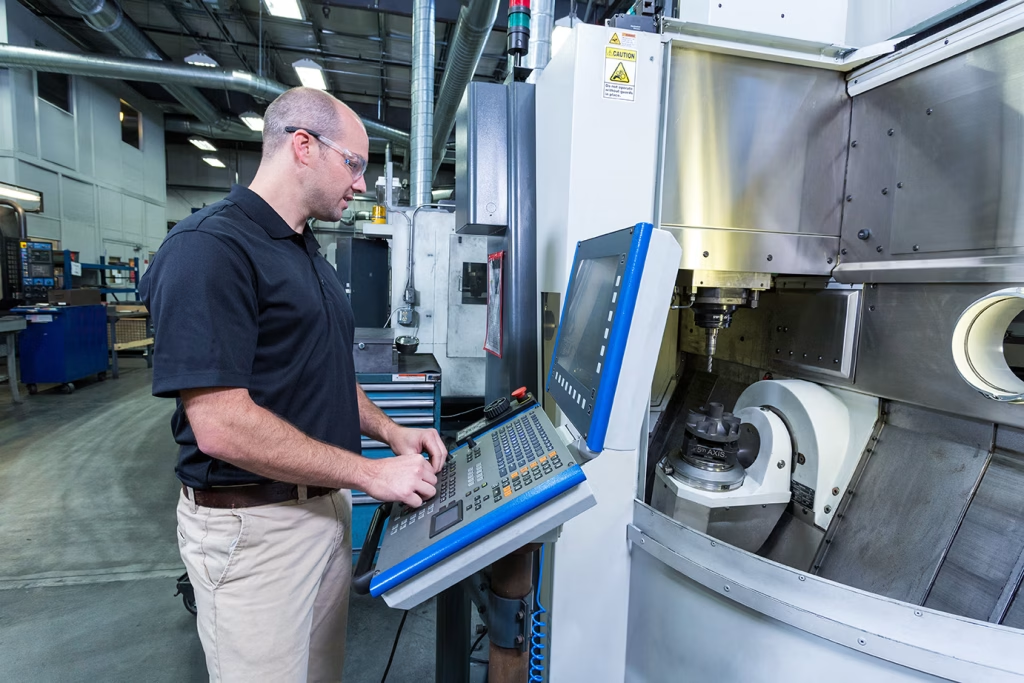
We need CNC Graphite Machinists who are ready to step up. We need problem solvers. We need people who care about the quality of their work because they understand the importance of the final application. At TCGS, we offer more than a job; we offer purpose-driven work where your craftsmanship directly powers hydrogen fuel cells, solar furnaces, and clean energy systems. We provide specialized training to turn skilled machinists into graphite experts—no prior graphite experience is required to begin your journey here. We believe in career mobility, providing clear pathways to grow into CNC programming, quality assurance, coatings, inspection, or engineering roles. You will work in modern, safe facilities equipped with high-velocity dust collection, diamond tooling, and advanced automation, all while being backed by the long-term stability of a global graphite leader with decades of experience.
You could work anywhere. But here, your work changes the world.
Frequently Asked Questions (Q&A)
Q1: How does graphite contribute to green energy?
A1: Graphite is essential for high-temperature applications like solar silicon production and conductive applications like hydrogen fuel cell plates. It enables these technologies to function efficiently.
Q2: What is the role of CNC Graphite Machinists in this process?
A2: CNC Graphite Machinists shape the raw material into complex, functional components. Their precision ensures that fuel cells seal properly and solar furnaces operate at peak efficiency.
Q3: What is Chemical Vapor Deposition (CVD)?
A3: [[CVD]] is a process where gases react at high temperatures to deposit a solid coating onto a surface. We use it to apply [[Silicon Carbide coating]] to graphite, improving its durability.
Q4: Is machining graphite safe?
A4: Yes. At TCGS, we prioritize safety. We use advanced dust collection systems that capture particulate at the source, ensuring a clean and healthy shop environment for our CNC Graphite Machinists.
Q5: What kind of career growth does Tokai offer?
A5: We offer pathways from machining into programming, quality assurance, and application engineering. As a global company, we provide long-term stability and opportunities for advancement.