The Art of Precision: Navigating Large-Scale Graphite Machining
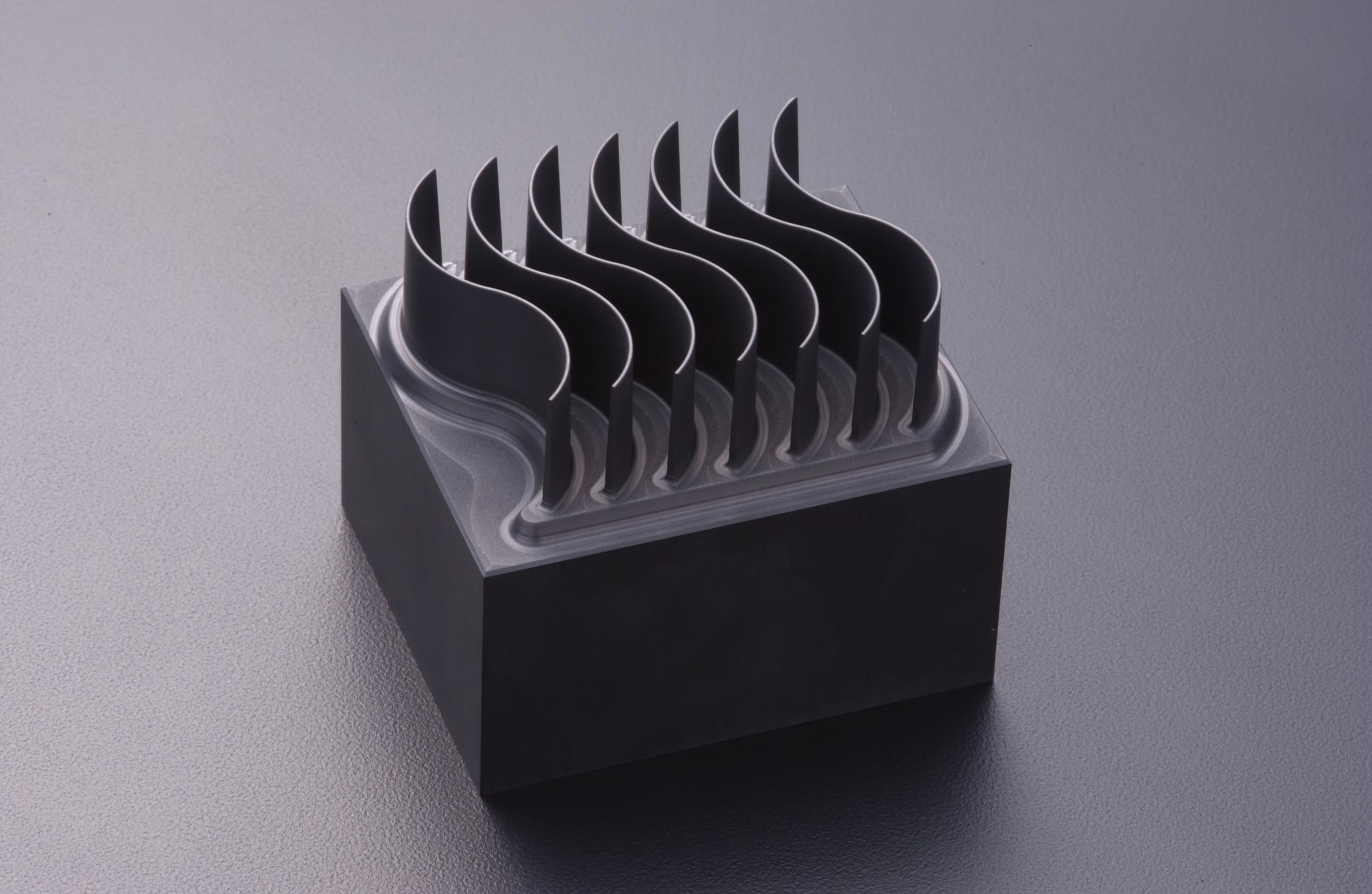
Large-scale Graphite Machining involves the precise removal of material from massive carbon blocks to create intricate structural components for high-temperature applications. This process demands specialized CNC turning and milling machines capable of maintaining tight tolerances across surface areas that can exceed several meters in diameter.
Why Size Matters in Graphite Machining
In the world of precision manufacturing, size usually compromises accuracy. However, at Tokai Carbon Graphite Solutions (specifically within our ETM capabilities), we reject that compromise.
We specialize in maintaining micron-level precision on components that weigh thousands of pounds.
This capability separates a standard machine shop from a true industrial partner. Furthermore, it separates a button-pusher from a master craftsman.
Graphite Machining on this scale is an art form.
It requires a deep understanding of material stress, tool pressure, and dust management. Consequently, we rely on a team that thrives on these complex challenges.

The Right Tools for the Job
You cannot machine a four-foot diameter electrode on a standard bridgeport. Therefore, we invest heavily in cutting-edge equipment. Our facility houses massive 5-axis machines designed specifically for the abrasive nature of carbon.
These machines allow us to approach the workpiece from complex angles without multiple setups. As a result, we maintain concentricity and true position even on our largest parts.
Key Equipment Capabilities:
- Large Swing Lathes: capable of turning large diameter aerospace fixtures.
- Gantry Mills: for machining long structural beams and susceptors.
- High-Speed Spindles: ensuring surface finish quality without inducing micro-cracks.
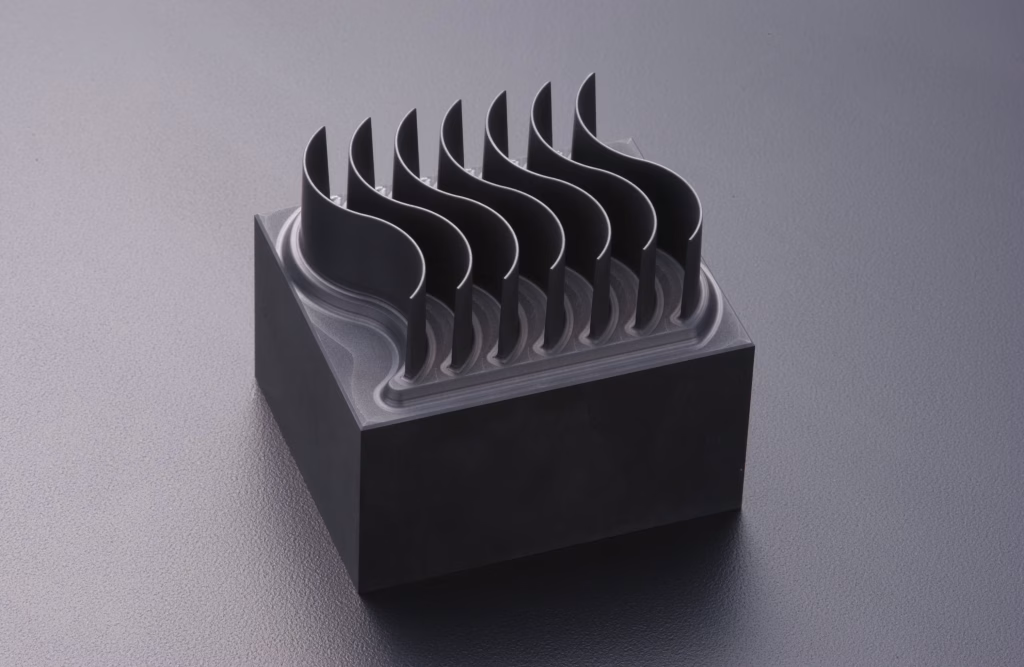
Overcoming the Material Challenge
Graphite is unique. It is heat-resistant and conductive, yet it is also brittle. In Graphite Machining, tool wear is a constant battle. The material is abrasive, eating away at standard carbide cutters.
Therefore, our machinists must be vigilant. They monitor spindle load and audio cues to detect dull tooling before it affects the part. This level of attention creates meticulously crafted components.
Additionally, dust control is critical. Unlike metal chips, graphite produces fine particulates. We utilize powerful, custom-engineered vacuum systems. This keeps our shop clean and our equipment running at peak performance. It creates a work environment where technology and cleanliness are priorities.
R&D and Custom Solutions
We do not just run production lots. We partner with clients on specialized R&D projects. Often, a customer comes to us with a theory. They need a heater design that has never been built. Or, they need a crucible with unique wall thickness variations.
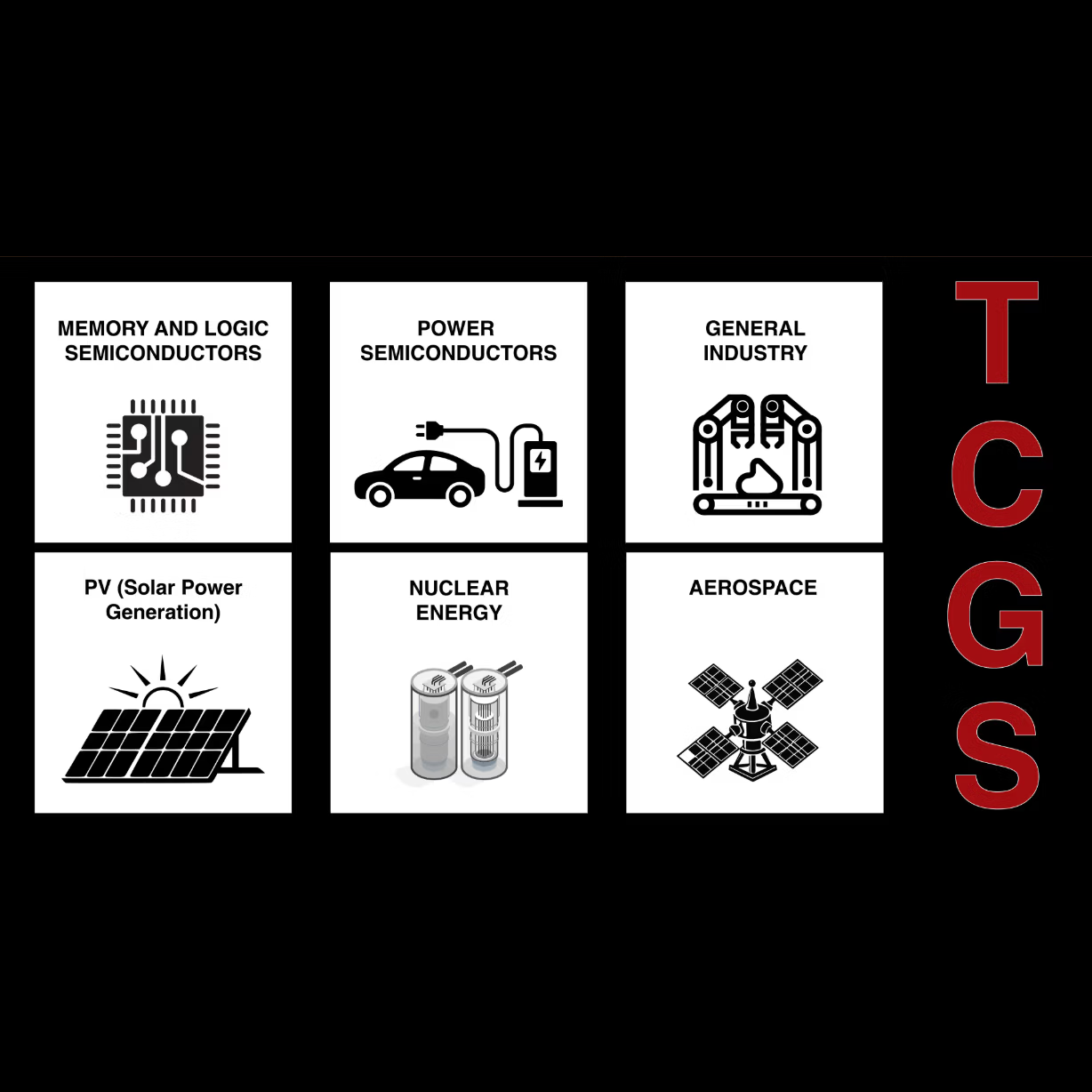
This is where our team shines. We leverage our decades of carbon and graphite machining expertise to turn these concepts into reality. For an engineer or a machinist, this is the ultimate playground. You are not just making the same part every day. Instead, you are solving new puzzles for the semiconductor, aerospace, and energy sectors.
The Human Element
Automation is powerful. However, it cannot replace human intuition. The success of large-scale Graphite Machining relies on the operator. This mastery is forged through a blend of Hands-On grit, advanced Software proficiency, and a foundation of Creative Education & Experience. Our team doesn’t just operate machines; they engineer solutions for the most demanding frontiers on—and off—the planet. From the vacuum of Space and the complexities of Satellites and Aircraft to the high-stakes environments of Nuclear power, Fuel Cells, and Solar energy, our work is foundational. Whether we are supporting the Oil industry, advancing Medical technology, or strengthening National Defense, we operate under one guiding principle: We make better things that make things better.
We value the machinist who knows how graphite “feels” under the cutter. We value the programmer who understands how to optimize a tool path for a brittle material. At Tokai Carbon Graphite Solutions, we combine this traditional craftsmanship with modern technology.
Accordingly, we are always looking for talent that shares this mindset. If you want to work on the largest, most critical components in the industry, this is your home. Contact us today
Frequently Asked Questions (Q&A)
Q1: What is the primary challenge of large-scale Graphite Machining?
A1: The primary challenge is maintaining dimensional stability over large distances. Graphite Machining on a large scale requires controlling vibration and tool wear to ensure the final inch of the cut matches the precision of the first inch.
Q2: How does Tokai Carbon Graphite Solutions manage graphite dust?
A2: We utilize high-velocity dust collection systems integrated directly into the machine enclosure. This captures particulates at the source, protecting both the operator and the precision ways of the cutting-edge equipment.
Q3: Why is 5-axis machining important for graphite?
A3: 5-axis machines allow the cutting tool to remain tangent to the surface. This reduces tool pressure and prevents chipping, which is vital when working with brittle materials like graphite.
Q4: Can you machine custom grades of graphite?
A4: Yes. We have extensive experience with various isostatic and extruded grades. Our team adjusts speeds and feeds based on the specific density and grain size of the material.
Q5: What industries rely on large machined graphite parts?
A5: Key industries include semiconductor manufacturing (crystal growing), aerospace (composite tooling), and alternative energy (nuclear and solar).